In a nutshell
- 🍚 Why it works: Rice’s hygroscopic starch granules and micro-porous surface attract and hold water vapour, cutting clumps and preventing soggy textures.
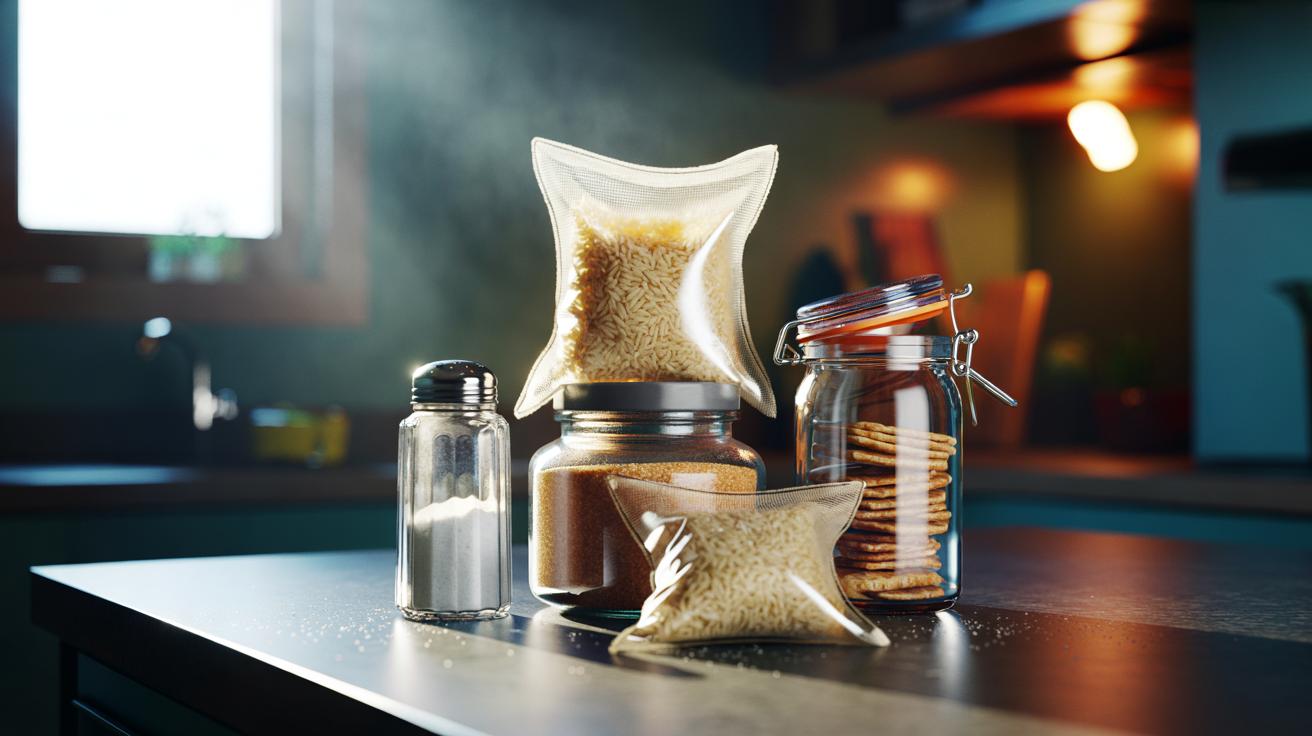
- 🧂 Practical uses: Slip rice in breathable sachets into salt shakers, brown sugar tins, and snack containers; target damp cupboard corners to keep salt free-flowing and crackers crisp.
- 🔁 Recharging: Bake used rice at 90–100°C for 30–40 minutes to dry and reuse; cool in a sealed jar, label sachets, and rotate during humid spells.
- 🛡️ Safety & limits: Pair with airtight containers, keep pouches away from spills to avoid mould, check gluten-free labels if needed, and remember rice isn’t for drying electronics.
- 🧪 Alternatives: For heavy humidity, use food-safe silica gel for greater capacity, and pair with bicarbonate of soda or activated charcoal to control odours.
Condensation on leftovers. Soggy salt. Limp crackers that used to snap. Moisture is the quiet saboteur of good food texture, and every British kitchen knows the nuisance. Here’s the elegant fix hiding in plain sight: raw rice. It’s inexpensive, edible, and brilliantly absorbent, drawing vapour before it turns granules to glue or crisps to cardboard. The trick is simple yet scientific, and it works fast. Stop food cling by giving humidity somewhere else to go. Below, we unpack why rice acts like a tiny sponge, where to deploy it, and when to reach for smarter alternatives for lasting freshness.
Why Rice Works as a Natural Desiccant
Rice isn’t magic. It’s materials science. The endosperm is packed with starch granules that are naturally hygroscopic, meaning they attract and hold water molecules from the air. Each grain also offers micro-crevices and a modestly porous surface, boosting surface area for contact. Put simply: more microscopic real estate, more vapour captured. As indoor relative humidity rises, rice takes up moisture until it reaches equilibrium, easing the load inside your jars, tins, and crumb-prone cupboards.
Speed matters in a busy kitchen. Finely broken or instant rice presents extra edges and pathways, so it often absorbs quicker than intact long-grain varieties. Place rice in a breathable pouch, and it actively wicks water vapour while keeping kernels off your food. Think of rice as a passive, food-safe moisture magnet that you can scatter strategically. It’s not as thirsty as lab-grade pellets, but it’s cheap, available, and safe to share space with dinner.
Another perk: rice doesn’t carry a strong flavour. That reduces the risk of taste transfer in close quarters. The grains are also easy to “recharge”. A low, gentle oven dry resets them for another shift, extending value. For most household jobs—clumpy salt, damp sugar, stale-ish crackers—rice delivers reliable desiccant performance without fuss or faff.
Practical Kitchen Uses: From Salt Pots to Crisp Snacks
Keep salt flowing by adding a teaspoon of raw rice to the pot or shaker. Use a small muslin square or a reusable tea bag to prevent grains from rattling onto the plate. For brown sugar that’s caked firm, pop a pouch of rice into the tin; it draws excess moisture that causes sticky clumps. Results arrive quietly—less clump, more pour. For crackers, nuts, or crisps, slip a rice sachet inside an airtight container to help preserve snap between nibbles.
Target damp zones. The back of a cupboard near a cold wall. The bread bin after a rainy week. Even spice jars that bridge hot pans and cool shelves. Position the rice where air circulates, not buried. Replace when the effect wanes, and store spare sachets in a jar so they stay clean and pest-free. Below is a quick guide to quantities and expectations.
| Problem | Rice Method | Time to Notice |
|---|---|---|
| Clumpy salt | 1 tsp rice in muslin inside shaker | 6–24 hours |
| Damp brown sugar | Small sachet in tin, sealed lid | 12–48 hours |
| Soft crackers/crisps | 1–2 tbsp rice per 1L container | Overnight |
Tip for recharging: spread used rice thinly on a tray and bake at 90–100°C for 30–40 minutes, then cool in a sealed container. Low heat, no browning; you are drying, not cooking. Label sachets with the date, and rotate monthly during humid spells.
Safety, Limits, and Smarter Alternatives
Rice excels at small, local jobs, but it has limits. In very humid flats or unventilated cupboards, grains will saturate quickly and need frequent recharging. Pair rice with airtight containers to trap dryness inside, and ventilate cupboards when you can. Use breathable pouches—muslin, paper tea filters—so grains don’t migrate into your meal. Keep rice away from direct spills; a wet pouch can harbour mould. Swap or dry it promptly if it ever feels soft, warm, or musty.
Allergy-wise, rice is naturally gluten-free, but stick to brands labelled accordingly if cross-contamination is a concern. Avoid perfumed rice; any aroma could ghost into delicate foods. While many people shove wet electronics into rice, experts advise purpose-made kits; food kernels aren’t designed for that. In the kitchen, your best pairing is prevention: cool foods before lidding, purge extra air from bags, and store dry goods above damp zones.
Consider alternatives when conditions are tough. Food-safe silica gel sachets absorb more, faster, and are easily regenerated in the oven. Bicarbonate of soda tackles odours while rice manages moisture; use both in separate pouches for pungent cupboards. Activated charcoal filters also curb smells in the fridge. Rice is a helper, not a dehumidifier—deploy it where a small, steady pull on humidity makes the difference between claggy and crisp.
Rice turns everyday storage into a smarter system. It’s frugal, food-safe, and flexible, giving clumpy ingredients a second chance and snacks their crunch back. The method scales—from a pinch in a shaker to a sachet in a family-sized tin—and it invites small rituals like recharging and rotating. Little habits restore big textures. Start with your worst offender: salt, sugar, or that sad box of crackers. Track the change overnight, then tune your quantities. Where will you place your first rice sachet, and what will you try to rescue next?
Did you like it?4.6/5 (22)