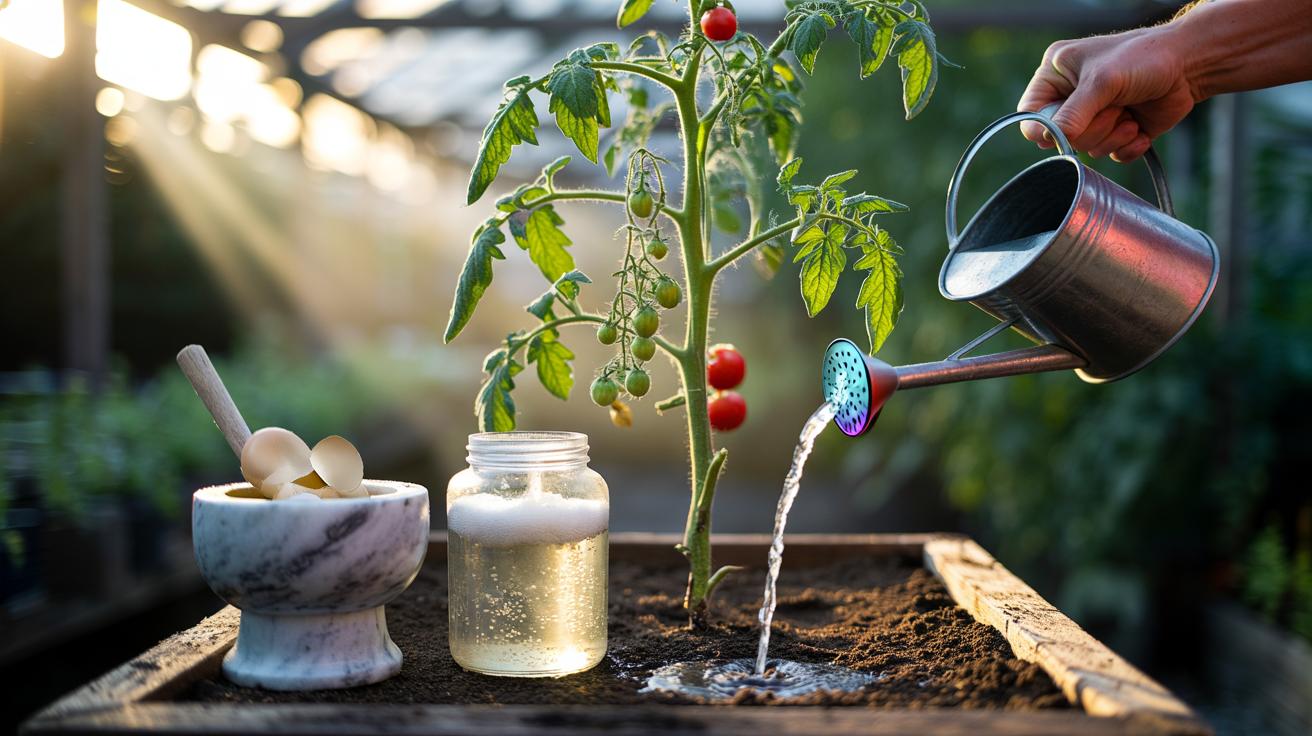
In a nutshell
- 🌱 Calcium underpins strong cell walls, healthy cell division, and stress signalling; because it’s immobile in plants, timely supply to new growth prevents issues like blossom-end rot and can make growth appear to triple under good conditions.
- 🥚 Transform eggshells into fast-acting calcium acetate by reacting fine shell powder with vinegar; this vinegar extract delivers plant-available calcium within days, far quicker than coarse shells or simple “shell tea.”
- ⏱️ Follow a seven-day schedule: bake and grind shells, fizz with vinegar, dilute the finished stock (about 1:150–1:200), apply as a root drench, optionally a gentle foliar test, then resume balanced feeding for sturdier stems and crisper new leaves.
- 🧪 Methods compared: Fine powder (slow-release CaCO₃), vinegar extract (rapid calcium), and shell tea (minimal soluble Ca); each has different prep time, dose, and onset—choose based on urgency and crop needs.
- ⚠️ Mind pH and interactions: eggshells act as a mild liming agent, so avoid on acid-loving plants; overdosing can antagonise K and P uptake—start small, maintain hygiene, and avoid mixing with strong alkaline feeds the same day.
Gardeners love a shortcut. And few are as beguiling as the promise that kitchen waste can turbocharge a bed of tomatoes. Eggshells, rich in calcium carbonate, do more than tidy the breakfast table; used well, they harden new tissues, stabilise growth, and steady yields. The twist is speed. Most calcium sources act slowly in cool British soils. Yet there is a method to make them sing within days, not months. By transforming shells into a soluble form, you can lift plant-available calcium in a single week and set the stage for fast, sturdy growth that looks like a leap forward rather than a shuffle.
Why Calcium Drives Explosive Vegetative Growth
Plants use calcium for the unglamorous but vital job of building strong cell walls and keeping membranes intact. That structural role is not optional; it determines how leaves expand, how stems resist collapse, and how roots probe into fresh substrate. Calcium also supports cell division at growing tips and stabilises signals inside cells, helping plants coordinate responses to heat, drought, and salinity. When calcium is marginal, you see blossom-end rot on tomatoes and peppers, tip burn in lettuces, distorted new leaves in ornamentals. Growth slows. Quality suffers.
Calcium is immobile in plants. Once placed in older leaves, it stays there, so new growth depends on a constant supply via xylem flow. That means watering patterns, root health, and the timing of any supplement matter as much as the supplement itself. Delivered in a form roots can quickly absorb, calcium tightens cell walls within days, making tissues less floppy and more efficient at photosynthesis. Pair that with adequate nitrogen and potassium, and vegetative growth surges. In vigorous conditions you witness the punchy response: thicker petioles, straighter trusses, and faster leaf-out that can make plant development look as if it has tripled.
Turning Eggshells Into Fast-Acting Calcium
Raw eggshells are roughly 95% calcium carbonate (CaCO₃). Left as coarse shards, they release nutrients glacially, relying on soil acids and microbes. The trick is to increase surface area and convert carbonate into a soluble salt. Two practical routes stand out at home scale: ultra-fine grinding and mild acid extraction. Grind baked shells to a talc-like powder (sub‑100 microns) and you accelerate microbial access. Better still, react powder with household vinegar to produce calcium acetate, a form plants can access within days. Think of it as fast-release calcium made from leftovers.
| Method | Prep Time | What It Delivers | Typical Rate | Onset |
|---|---|---|---|---|
| Fine powder | 1–2 hours | Slow-release CaCO₃ | 50–100 g/m² | Weeks to months |
| Vinegar extract | 24–48 hours | Soluble calcium acetate | 1:100–1:200 dilution | Days |
| Hot “shell tea” | Overnight | Trace soluble Ca | As drench | Slow to moderate |
For safety, bake shells at 120–150°C for 10–15 minutes to reduce microbial risk and make them brittle. Do not foliar spray undiluted acids or concentrated extracts. Strain the liquid to remove grit that might scorch leaves. If you prefer a biological route, a squeeze of lemon (citric acid) or fermented lactic whey can chelate calcium gently, but vinegar remains the simplest, predictable option.
Seven-Day Schedule: From Shell to Strong Stems
Day 1: Rinse and dry a dozen shells. Bake, then grind to a fine powder. In a wide jar, slowly add 250 ml clear vinegar to 40–50 g powder. It will fizz as CO₂ escapes; stir until bubbling wanes. Leave loosely covered. Day 2: Stir again. When fizzing is minimal, top up with clean water to 500 ml. You’ve made a concentrated calcium acetate stock. Day 3: Dilute 1:150 with water. Drench around the root zone of fruiting crops—tomatoes, peppers, courgettes—at 200–300 ml per plant. Water-in lightly. Aim for moist, not sodden, media to keep xylem flow strong.
Day 4: Inspect new leaves. Tissues should look less flaccid; margins crisp. If weather is cool or plants are in containers, apply a second root drench at 1:200. Day 5: Optional foliar feed at 1:250 in early morning or late evening; test on a few leaves first to avoid leaf burn. Day 6: Resume normal fertigation with balanced feed; calcium works best alongside adequate nitrogen and magnesium (Epsom salts at 0.5 g/litre if leaves pale between veins). Day 7: Measure canopy spread and stem thickness. You won’t add biomass by magic, but you’ll often see sturdier, faster extension. In responsive crops under good light and warmth, the visible growth rate can appear to triple versus last week’s stutter.
Caveats, Soil Science, and Safety
Eggshell calcium is not a silver bullet. Carbonate forms can nudge pH upward, acting as a mild liming agent. In alkaline soils or for acid-loving plants—blueberries, azaleas, camellias—skip shells entirely. Containers are different: media acidifies over time, and a controlled calcium boost steadies growth. Overdo it and you risk antagonising potassium and phosphorus uptake, leading to locked-out nutrients despite a full cupboard. Always start with small test doses and observe.
Hygiene matters. Handle raw shells carefully; baking helps, but keep preparation kit clean. Strain vinegar extracts to prevent sprayer clogs and leaf scorch. Never mix with strong alkaline feeds simultaneously—let at least 24 hours pass. If you’re managing hard tap water, tally existing calcium to avoid excess. Soil tests (even inexpensive DIY kits) will tell you if the real issue is pH or a watering pattern that disrupts calcium flow. And remember: calcium fixes structural weakness; it won’t compensate for low light, cold nights, or starved roots. Pair your shell science with warmth, airflow, and steady irrigation for the headline results.
Used cleverly, eggshells become more than a thrifty gesture. They’re a nimble way to stabilise cell walls, avert blossom-end rot, and unlock growth that looks dramatic within a week, not a season. The chemistry is simple, the kit is basic, and the outcomes are visible: firmer stems, fresher leaves, fewer physiological hiccups. In a year of erratic weather, that reliability is priceless. Will you try the vinegar route, run a side-by-side with plain shells, and see how far a week of targeted calcium can take your plants?
Did you like it?4.5/5 (25)