In a nutshell
- ⚡ 30-Second Method: Warm rinse, sprinkle 1–2 tsp of salt, swirl/scrub (lemon optional), brief pause, then quick hot rinse; dry metal immediately.
- 🧪 Why It Works: Salt is a micro‑abrasive with an osmotic pull; a light brine reduces surface tension so grit lifts tannins, grease, and baked-on bits fast.
- 🧽 Best Uses: Tea/coffee-stained mugs, stainless pans, cast iron (with coarse salt), and cloudy glassware—delivers quick clarity with fewer chemicals.
- 🛑 Cautions: Avoid prolonged contact on aluminium and carbon steel; go gentle on non-stick; never leave salty paste on knives—rinse and dry swiftly.
- 💷 Cost & Eco: Under £1/kg, pennies per clean, plastic-light; but it’s not a disinfectant—still use hot water and detergent for hygiene.
Sticky baking trays, tannin-stained mugs, cloudy wine glasses: the washing-up gauntlet every UK kitchen runs nightly. Here’s an under-a-minute fix hiding in plain sight. Grab common table salt. Sprinkle, swirl, rinse. Done. The crystalline grit shears away residue while a quick brine loosens what’s baked-on, turning elbow grease into a light polish. You don’t need gadgets or harsh chemicals, just a spoon and the tap. It’s fast. It’s cheap. And for many stains, it works in roughly 30 seconds. Below, the simple science, precise steps, and where this hack shines—plus the few places you should steer clear.
Why Salt Works in the Sink
Salt is a double act: micro-abrasive and moisture-drawing. The crystals’ angular edges provide gentle scouring that’s tough on films but kind to robust surfaces like glass, ceramic, and stainless steel. Add warm water and you create a light brine that breaks surface tension, letting residues lift without prolonged soaking. On greasy pans, the grains disrupt the slick layer so your cloth actually grips, not skates. On tannin-stained cups, abrasion plus dilution attacks that brown ring immediately.
Chemically, the effect is simple but potent. Salt doesn’t “dissolve” carbonised food, yet it helps dislodge it. The osmotic pull draws a whisper of moisture under dried-on sauces, softening the bond. Mechanical action does the rest. The trick is speed and contact: salt needs a thin film of water and movement, not a cold, dry scrub. Do that, and those browned patches start to lift at once.
There’s a safety note. Salt can corrode some metals if left sitting. Use it quickly, rinse thoroughly, and dry. Short contact, swift rinse, spotless finish.
The 30-Second Method, Step by Step
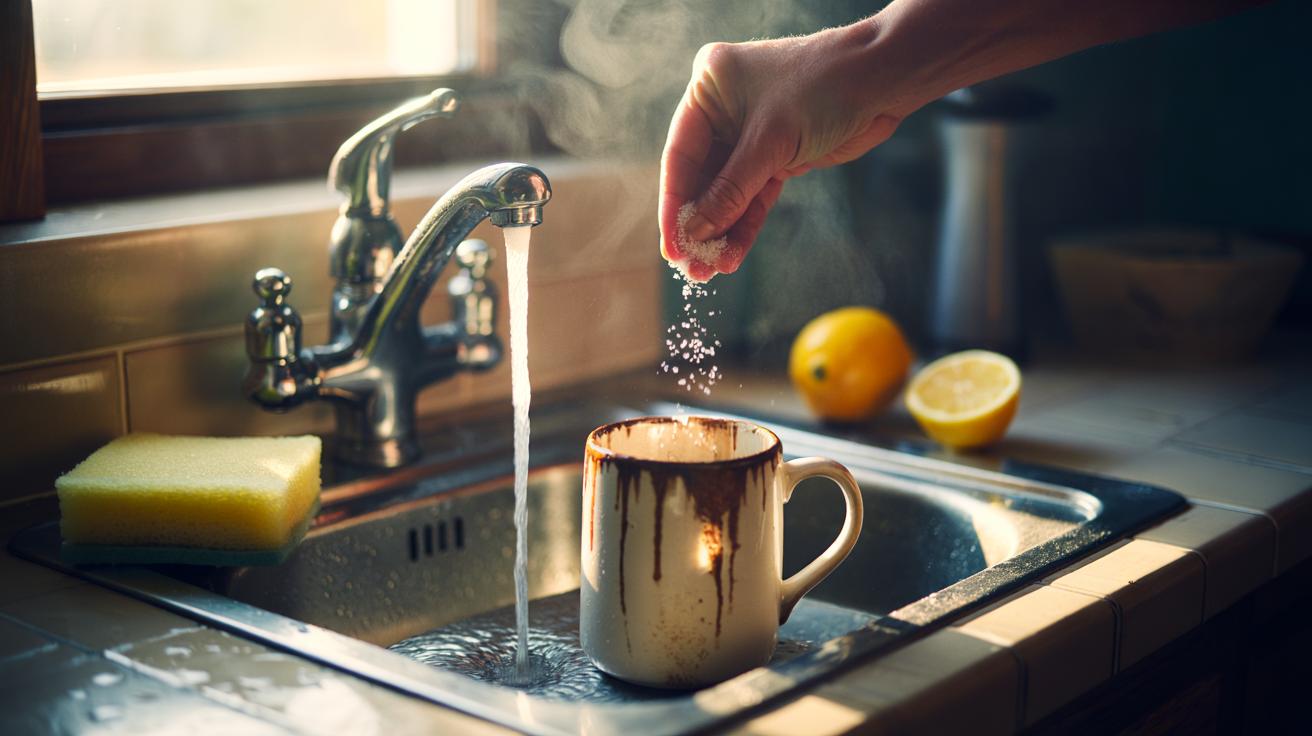
Work warm. Heat accelerates everything. Rinse the item with hot water, then shake off excess so a thin sheen remains. Dust on 1–2 teaspoons of table salt for a plate or mug; up to a tablespoon for a frying pan or roasting tin. For mugs, swirl with a damp cloth or sponge for 10–15 seconds; the stain will fade right before your eyes. For pans, sprinkle, splash a little hot water to make a gritty paste, then circle your cloth around the stubborn spot.
Need extra bite? Halve a lemon and use it as the scrubber. The peel grips; the citric acid helps with tea, coffee, and light limescale haze. A few tight circles, then pause for five seconds. That micro-soak lets the brine creep under residue. Keep the motion small and firm; the grit should glide, not gouge.
Finish fast. Rinse with hot water, check the sheen, and repeat once if needed. For burnt sugar or caramel, add a splash more water, re-salt, and give another 10 seconds. Dry metal items at once to prevent spotting. Result: fewer chemicals, near-instant clarity, less scrubbing.
Where Salt Shines and Where to Skip It
This hack is brilliant on everyday culprits: tea- and coffee-stained ceramics, cloudy glassware, oily stainless pans, and crusted roasting tins. It excels with “last bit won’t budge” moments, turning a five-minute scrub into a quick polish. On cast iron, salt is a classic: scour while warm, then oil lightly to protect the seasoning. On wine glasses, use a fine sprinkle and a gentle touch; the grit removes lipstick and haze without leaving swirls.
There are limits. Avoid prolonged salty contact on aluminium or carbon steel; rinse immediately to prevent pitting. Go gentle on non-stick coatings—light pressure only. Don’t use on soft plastics, lacquered wood, or delicate painted patterns. And never leave a salty paste drying on knives; wash and dry straight away. Think targeted, short, controlled use—then a thorough rinse.
| Item | Salt Form | Add‑On | Time | Caution |
|---|---|---|---|---|
| Mugs (tea/coffee) | Fine table salt | Half lemon (optional) | 20–30 sec | Rinse well |
| Stainless pans | Table or kosher | Hot water splash | 30–45 sec | Dry immediately |
| Cast iron | Coarse salt | Oil after | 30–60 sec | Do not soak |
| Wine glasses | Fine salt | None | 15–25 sec | Very light pressure |
| Aluminium trays | Fine salt | None | 20–30 sec | Rinse instantly |
Cost, Environment, and Kitchen Reality
A 1 kg bag of basic table salt can cost under £1 in UK supermarkets. That’s pennies per week for a kitchen upgrade. A heaped teaspoon weighs roughly 6 g, so each quick clean costs fractions of a penny—far less than specialised sprays. Packaging is minimal; there’s no perfumed residue, and you’re not rinsing synthetic surfactants down the drain. It’s a pragmatic, plastic-light tweak that fits everyday routines.
Set expectations. Salt is a cleaning accelerator, not a disinfectant. You still need hot water and detergent for proper hygiene, especially after raw meat. But for stains and films that resist the first pass, this trick is the fast finisher. Keep a salt pot by the sink, train your hands to reach for it, and you’ll save time—and your temper—night after night.
In a small ritual of speed and satisfaction, salt turns the last, stubborn bits of washing-up into a 30-second victory. It’s tactile, almost playful, and startlingly effective on those everyday nuisances that linger after the sponge has done its best. Use it fast, rinse faster, and enjoy the shine. What’s the first thing in your kitchen you’ll try this on—tea-stained mugs, a scorched roasting tin, or the cloudy stemware waiting for its second life?
Did you like it?4.5/5 (21)