In a nutshell
- ✨ Streak-free in under a minute: Mix 1:1 distilled white vinegar with distilled water, mist the microfiber (not the glass), wipe in an S-pattern, then buff dry.
- 🧪 Why it works: Acetic acid neutralises alkaline residues and dissolves mineral deposits, and the formula leaves no surfactant film to cause streaks.
- 🧰 Tools & ratios: Use 5% distilled white vinegar, a fine‑mist sprayer, and a tight‑weave microfiber folded into eight panels; hold 3–5 seconds on specks before wiping.
- ⚠️ Safety & exceptions: Never mix vinegar with bleach, keep off natural stone, spray the cloth to protect mirror backing, and patch‑test coated or antique glass; add one drop of soap only for heavy grease, then finish with vinegar.
- 🌬️ Time-savers: Store the bottle and cloth together, run ventilation to speed drying, and skip paper towels and waxy polishes for a longer‑lasting, crystal‑clear finish.
There’s a deceptively simple secret to banishing those cloudy arcs and linty smears that taunt you every morning: vinegar. Reach for a bottle of plain distilled white vinegar, a clean microfiber cloth, and 60 seconds. That’s it. The appeal is obvious. No perfumes, no rainbow sheen, no sticky residues that lure new dirt. The result is a crisp, streak-free reflection, fast. As a quick-fix trick, it’s brilliant for flats, hotel bathrooms, or busy family homes. Below, I break down the science that makes vinegar so effective, the one-minute routine that actually works, and the smart tools that shave off precious seconds without sacrificing that flawless finish.
The Science: Why Vinegar Leaves No Streaks
Most mirror streaks come from two culprits: leftover alkaline residues (think soap scum and hard-water deposits) and cleaning products that leave behind surfactant films. Vinegar, a weak acid made primarily of acetic acid and water, neutralises those alkalis and dissolves mineral carbonates that dry into ghostly lines. By removing the residue that causes uneven drying, vinegar clears the path to a uniform shine. While it isn’t a detergent, its acidity cuts through light grime and product overspray so the glass dries clean, not patchy. That’s why it’s a favorite in newsrooms and on shoots: reliable, portable, quick.
Water quality matters. Tap water, especially hard water, can re-deposit minerals as it evaporates. Pairing vinegar with distilled water reduces the risk of new spotting. The cloth matters, too. Microfiber acts like millions of tiny hooks, lifting oils and lint rather than smearing them. Use a light mist, not a drench, so the solution flashes off quickly. Less liquid equals fewer streaks. Done right, the chemistry and the wipe technique work together: dissolved residues, even evaporation, and minimal fibers left behind.
One more quiet advantage: vinegar doesn’t contain waxes, dyes, or fragrances that can cling to glass. That absence is powerful. It means nothing is left to catch light and make your reflection look milky. In a minute, that’s the difference between “nearly clean” and photograph-ready.
One-Minute Method: Step-by-Step Routine
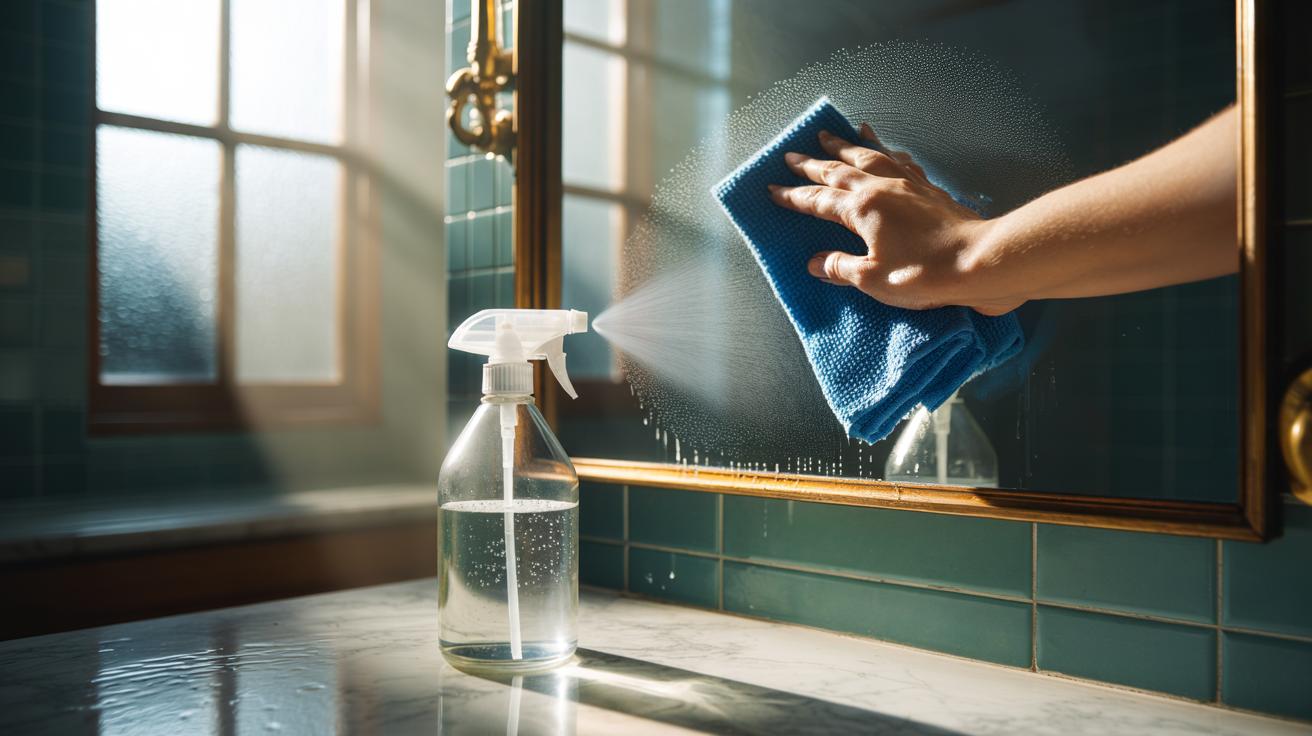
Keep a small spritzer ready: mix 1:1 distilled white vinegar and distilled water. Grab a clean, tightly woven microfiber cloth, folded twice to create eight clean panels. Speed comes from preparation. Start by dry-dusting the mirror with one panel; it whisks away loose lint that can turn into streaky trails. Now mist the cloth—never the mirror—two or three sprays only. This prevents drips from reaching the mirror’s edge backing, which can corrode over time.
Wipe in a steady S-pattern from top-left to bottom-right, overlapping each pass by a centimetre. Minimal pressure is best; let the cloth’s fibers do the work. Flip to a dry panel and immediately buff the glass with quick, featherlight strokes. Edges last, using a clean corner of the cloth to avoid dragging moisture under the frame. For toothpaste specks or hairspray dots, hold the damp cloth on the spot for five seconds; then swipe. The dwell softens the crust, the buff erases the trace. You should have a crisp reflection in under a minute.
Common pitfalls to dodge: paper towels (they shed and streak), over-spraying (causes runs), and using greasy “multi-surface” polishes on glass (they layer shine-killing films). Keep it lean and precise. That’s the trick.
Tools, Ratios, and Time-Saving Tricks
Choosing the right kit turns a chore into a quick win. The combination of distilled water, white vinegar, and a high-quality microfiber is the fast lane to a streak-free mirror. Add a fine-mist sprayer and you control moisture like a pro, preventing drips and hastening evaporation. If smell is a concern, ventilate briefly or add a drop of unscented dish soap to the mix—not for suds, but to help wetting on very waxy residues. Keep it minimal so it doesn’t reintroduce streaks.
| Item | Best Choice | Ratio/Spec | Why It’s Fast |
|---|---|---|---|
| Vinegar | Distilled white | 5% acidity | Dissolves alkaline film; no dyes or oils |
| Water | Distilled | — | No mineral spots on drying |
| Mix | Spray solution | 1:1 vinegar:water | Effective, quick-evaporating, low residue |
| Cloth | Microfiber, tight weave | Folded into 8 panels | Multiple clean faces, fewer streaks |
| Dwell | Spot treatment | 3–5 seconds | Loosens toothpaste, hairspray |
Set-and-forget convenience keeps the job under one minute. Store the bottle and cloth together in a bathroom cabinet; swap in a fresh cloth weekly. For mirrored wardrobes or gym mirrors, a wider cloth speeds coverage. If the room is humid, run the extractor fan for a minute before cleaning to quicken drying. Tiny tweaks, big payoff.
Safety, Materials, and When Vinegar Isn’t Enough
Vinegar is safe on glass, but respect the surroundings. Never mix vinegar with bleach; that produces toxic chlorine gas. Avoid pairing it with hydrogen peroxide in the same bottle, which can form irritating peracetic acid. Keep overspray away from natural stone like marble or limestone, which acids can etch. Always spray the cloth, not the mirror, to protect the backing at the edges from moisture creep and premature desilvering. On coated or anti-fog mirrors, patch-test a corner first.
Sometimes the quick fix needs a warm-up act. Heavy limescale blooms, silicone overspray, or sticky wax polishes may demand a pre-clean: use a dedicated limescale remover on the tiles or tap first (not the mirror), or a plastic scraper for paint flecks. For antique or foxed mirrors, less is more—consult a restorer if the silvering is fragile. Greasy fingerprints after a bathroom makeover? Add one drop of unscented dish soap to your vinegar mix, clean, then finish with a plain 1:1 spritz and buff. The final vinegar pass removes any surfactant trace, preserving that crystal look.
If a smell lingers, crack a window; it dissipates quickly. In return, you get no synthetic residues and a mirror that stays cleaner for longer, because there’s nothing sticky left to attract dust.
In under a minute, you can ditch the cloudy swirls and reclaim a razor-sharp reflection with a bottle of vinegar, a splash of distilled water, and a good microfiber. It’s low-cost, low-waste, and delightfully reliable. The secret is small amounts of liquid, smart wiping, and a clean cloth. Once you’ve tried it, it becomes muscle memory—just a quick S-pattern and a buff. Ready to put it to the test on your busiest morning, or will you save it for the next time your mirror throws back a foggy frown?
Did you like it?4.3/5 (26)