In a nutshell
- 🍋 Use the two-minute lemon method to achieve streak-free windows fast; citric acid dissolves hard water deposits while light essential oils help reduce beading.
- ⏱️ Follow the timing: 0:00–0:30 apply lemon in S-motions, 0:30–1:00 spread with a damp cloth, 1:00–2:00 buff dry with a microfibre cloth for a crystal finish.
- 🧼 For stubborn marks, pair lemon with a pinch of bicarbonate of soda as gentle abrasion; avoid on tinted films, delicate coatings, and natural stone sills.
- 🪟 Protect frames and seals: wipe runoff promptly on uPVC, timber, and aluminium; keep juice away from eyes, patch test decorative glass, and always finish bone-dry.
- 🌱 Enjoy sustainability and savings: one lemon cleans multiple panes, reduces plastic and synthetic fragrances, and works especially well in hard-water areas.
Forget the pricey sprays and smears that linger after a sunny morning clean. A fresh lemon, sliced and swiftly deployed, can turn hazy panes into gleaming glass in just two minutes. In a small kitchen flat or a detached house on a breezy hill, the principle holds: citric acid cuts grime, lifts minerals, and leaves a crisp finish that looks professionally done. It’s fast. It’s cheap. It smells like summer. The trick is to work with intent and minimal moisture, then buff hard. If you’ve ever battled streaks after hours of elbow grease, this simple method could be your two-minute revolution.
Why Lemon Works on Glass
At the heart of the lemon’s magic is citric acid. This mild organic acid dissolves hard water deposits, breaks the bonds in soap scum, and loosens that invisible film of airborne grease that makes windows look dull. Think of it as a tiny chelating expert, gripping calcium and magnesium particles so they can be wiped away with a single confident pass.
There’s more to it than chemistry. Lemon’s essential oils act like a featherweight surfactant, nudging water to sheet evenly and reduce the micro-beads that dry into streaks. No ammonia. No fogging. No dye residues. For allergy-prone homes or anyone chasing a lower-chemical routine, the appeal is obvious. A cut lemon also offers gentle abrasion from microscopic pulp fibres, perfect for lifting film without scratching, especially when paired with a microfibre cloth. Use cool water, not hot; heat can flash-dry droplets into marks before you reach them. The result? Clarity that snaps into focus as the light changes across the glass.
Two-Minute Method: Step by Step
This is speed cleaning with standards. Assemble one fresh lemon (halved), a small bowl of cool water, and two cloths: one microfibre for buffing, one general cloth for initial wipe. Work on one pane at a time. Timing matters; momentum does the heavy lifting.
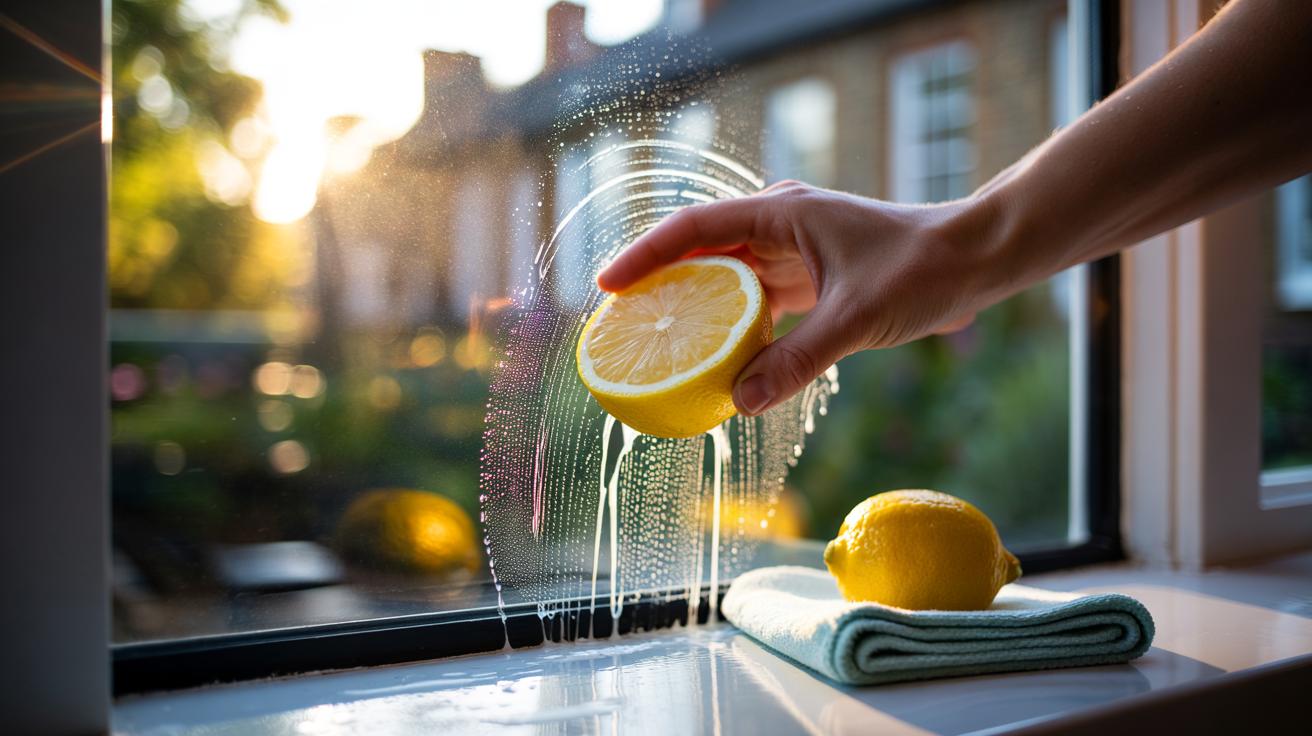
First 30 seconds: dab the cut side of the lemon in water, then glide it across the glass in overlapping S-motions. Add a light squeeze for extra juice on greasy patches. Next 30 seconds: with the damp cloth, make a quick pass to spread the solution thinly and lift loosened grime. Final 60 seconds: switch to a clean, dry microfibre and buff. Small circles for edges, long vertical strokes for the centre. Don’t overthink it. Move briskly and stop as soon as the shine appears.
| Step | Action | Time |
|---|---|---|
| 1 | Apply lemon in overlapping S-motions | 0:00–0:30 |
| 2 | Quick spread with damp cloth | 0:30–1:00 |
| 3 | Buff to a streak-free finish | 1:00–2:00 |
Work small, work fast, and finish dry. If sunlight is strong, shade the pane or clean the interior first to avoid rapid evaporation. The payoff is immediate: a streak-free gleam that survives the afternoon sun test.
Tackling Stubborn Marks and Frames
Not all glass grime is equal. Sticky fingerprints and general haze vanish quickly. But for limescale specks, bird droppings, or old adhesive shadows, add a pinch of fine bicarbonate of soda to the lemoned surface and massage lightly with the cut peel. The gentle abrasion supercharges the acid. Rinse with a barely damp cloth, then buff dry. Do not use this abrasive boost on tinted films or delicate coatings.
Edges and frames matter to the finish. On uPVC and painted timber, wipe runoff promptly; acids can nibble at tired paint if left to linger. For aluminium, keep the juice on the glass and avoid sitting puddles. Rubber seals? A quick pass is fine, then dry. Use a cotton bud along the inner gasket line where grey residue builds. If you spot black mould on putty or seals, skip the lemon and clean that area separately with a mould-specific approach. Never use lemon on natural stone sills such as marble or limestone; acid etches them. Finish by running a dry cloth along the frame’s bottom edge to stop fresh drips meeting your pristine pane.
Sustainability, Safety, and Savings
There’s a reassuring thrift to the lemon method. One fruit cleans multiple panes, costs pennies, and leaves no synthetic mist in the room. The peel goes in the food waste bin or, better yet, powers your next citrus vinegar infusion for general cleaning. Less plastic. Less fragrance fog. More control. For homes with children or pets, the low-tox profile is a win. Still, common sense: keep juice away from eyes and rinse hands if you have cuts. On delicate decorative glass, patch test a small corner and always finish bone-dry to protect frames.
From a budget perspective, lemon stands tall against blue-bottle classics. There’s no subscription, no overspray, and fewer cloths to wash because the process is lean. If you’re in a hard-water area, this acid-led approach is uniquely effective at managing mineral haze that makes even clean windows look tired. The scent? Bright, fleeting, and not cloying. It fades as the shine arrives, which is exactly what you want in a small, tightly sealed flat.
What’s compelling about the lemon window trick isn’t just the speed; it’s the clarity it forces into the ritual of cleaning. You prep fast, you move with purpose, and you finish with a sweep that rewards the effort instantly. Two minutes, one lemon, spectacular light. It’s a tiny shift that turns a chore into a neat, almost satisfying sprint. Are you ready to abandon the spray-and-pray routine and try a two-minute lemon polish on your brightest window this weekend, or will you put it to the test on the pane that usually defeats you?
Did you like it?4.6/5 (29)