In a nutshell
- ✂️ Use aluminium foil: fold 6–8 layers, make 15–20 full-length cuts, wipe residue, and oil the pivot for instant improvement.
- 🧪 It works via micro-serrations and gentle edge realignment—more conditioning than full sharpening, with noticeable gains at the tips.
- 🚫 Avoid on serrated blades, fine fabric shears, and chipped edges; opt for professional sharpening when damage or precision bevels are involved.
- 🧼 Prioritise safety and hygiene: clean and dry blades, wash kitchen scissors post-hack, and don’t overdo cuts to prevent a rough edge.
- 🛠️ Extend life with good maintenance: correct storage, occasional oiling, proper tension, and using the right tool for each task.
Blunt scissors slow everything. Food prep. Craft. Everyday post. If your trusty pair now chews rather than slices, a roll of humble aluminium foil can resuscitate it in seconds. This quick kitchen hack doesn’t rival a whetstone, but it delivers a fast, practical improvement that restores clean cutting for most household tasks. I tested the method on three common pairs: budget kitchen scissors, mid-range office cutters, and a sturdy multipurpose set. Each gained bite, especially near the tips. The trick relies on simple physics and a bit of controlled abrasion. Easy, cheap, safe. And crucially, you already own the only tool you need—foil.
Why Aluminium Foil Works on Dull Blades
Aluminium foil is soft, yes, but layered and folded it becomes a surprisingly effective conditioning medium. When you cut through it, microscopic particles interact with the scissor edges, creating micro-serrations that help grip and slice fibrous materials like herbs, string, and packaging. Think of it less as full sharpening and more as edge burnishing and realignment: the foils’ thin layers encourage the blades to meet properly again, and the act of repeated cuts polishes tiny burrs that sap performance. That’s why results are instant.
It’s also about pressure and angle. Each snip forces the bevels to kiss under load, nudging them back into a more efficient geometry while depositing a faint texture helpful for everyday cutting. This hack won’t repair chips, fix bent blades, or replace professional honing on premium shears. Yet for general-use scissors that have simply dulled through routine work, the foil method offers a swift, dependable uplift—particularly towards the tips, where wear is most obvious. The improvement is tactile: resistance falls, fibres stop snagging, and cuts start sounding crisp again.
Step-by-Step: Sharpen Scissors With Foil in Under a Minute
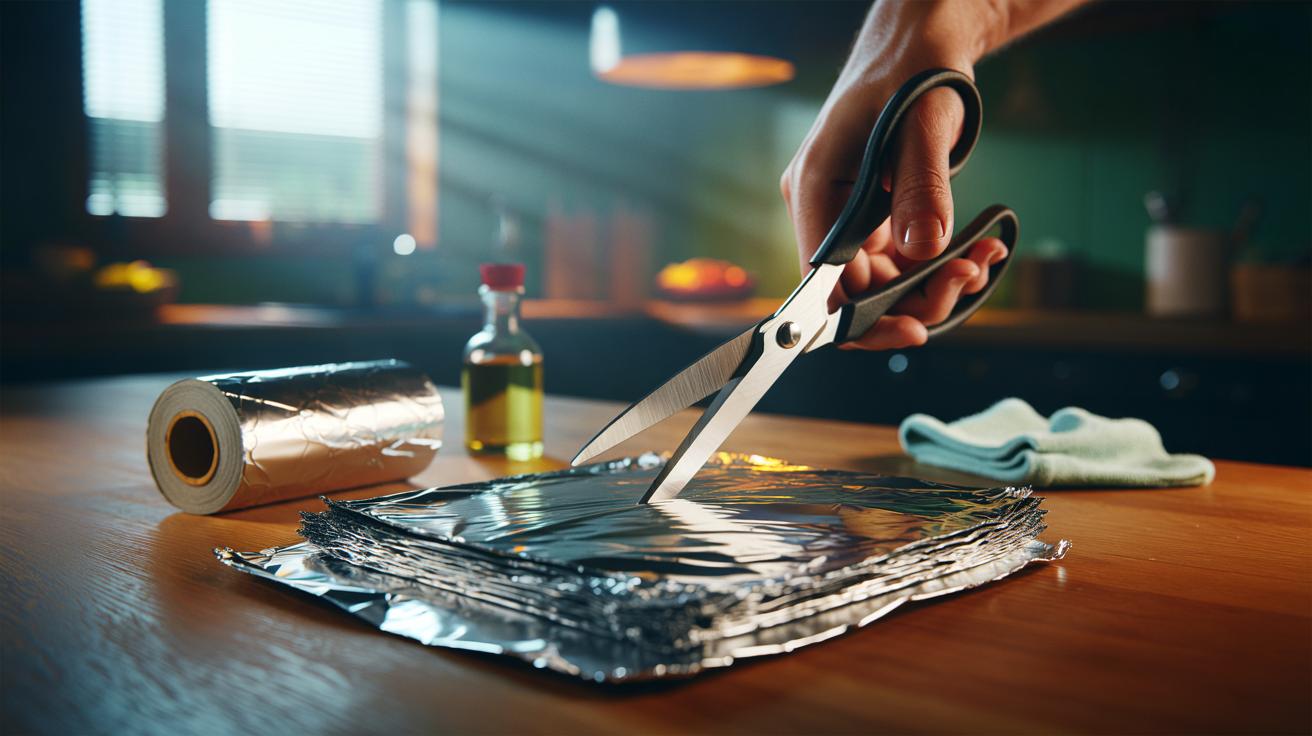
Start with a sheet of aluminium foil about 30–40 cm long. Fold it several times to create 6–8 layers; this multiplies the abrasive contact without becoming unwieldy. Hold the foil firmly, and make 15–20 full-length cuts, from heel to tip, opening the blades wide each time. Aim to keep the factory angle—don’t twist your wrist. Rotate or refold the foil to expose fresh sections if it begins to shred too easily.
Next, wipe both blades with a damp cloth to remove grey residue, then dry thoroughly. A single drop of light oil at the pivot, worked through several open-and-close cycles, can restore smooth action. Test on ordinary printer paper: a clean slice with no fuzzing means job done. If it still hesitates, repeat 8–10 cuts. Stop if you feel grinding, hear scraping, or see visible nicks—those are signs you need professional sharpening. For kitchen use, finish with a soap-and-water wash to remove any lingering metallic dust before returning the scissors to food tasks.
When This Hack Helps—and When It Doesn’t
Foil cutting shines as a maintenance quick fix for general household, office, and basic kitchen scissors. It’s ideal before chopping herbs, trimming baking paper, or opening stubborn packs. It also rescues gift-wrapping sessions, where dulled tips can ruin precision. But it isn’t universal. Avoid using it on serrated blades, high-end fabric shears, hairdressing scissors, or specialty shears with very acute bevels; these tools need proper stones or a trained technician. If your scissors pull fabric threads or leave visible dents on the blade, stand down—foil won’t cure structural damage.
Keep an eye on residues. Foil can leave tiny specks along the edge; a quick wipe prevents marks on paper or food. Don’t overdo it either. Aggressive, high-repetition cutting may exaggerate micro-serrations and reduce smoothness on delicate materials. As a rule, apply the hack sparingly, then maintain through good habits—cleaning, drying, gentle storage, and using the right tool for the job. If you’re sharpening monthly and performance fades within days, that’s a clue to invest in better steel or book a professional service.
| Scissor Type | Use Foil Hack? | Suggested Approach | Notes |
|---|---|---|---|
| Kitchen utility scissors | Yes | 15–20 cuts; clean and oil | Wash after sharpening |
| Office/paper scissors | Yes | 10–15 cuts; test on paper | Light pressure for smoother edge |
| Serrated or micro-tooth blades | No | Professional service | Risk of damaging serrations |
| Fabric or dressmaking shears | Prefer no | Stone/honing guide | Protects fine bevels |
| Damaged/chipped edges | No | Repair or replace | Foil can’t fix chips |
Keep Your Scissors Sharper for Longer
Good habits stretch the life of an edge. Wipe blades after sticky tasks—adhesives and food residues dull faster than cardboard ever could. Store scissors dry and closed to protect the tips. A periodic drop of mineral oil at the pivot wards off stiffness, especially in humid kitchens. Adjust tension if the blades feel loose; most pairs have a screw you can snug with a small driver. Right tool, right job remains the golden rule: avoid cutting wire, heavy plastic ties, or abrasive packaging with your best pair.
Build a simple routine. Light foil refresh monthly for general-use scissors, quarterly for occasional cutters, and never for specialist tools. Keep a second, sacrificial pair for DIY, and ringfence your fabric shears for textiles only. If you notice uneven cutting despite foil work—one blade biting, the other slipping—seek professional sharpening to reset the bevels. Finally, be tidy: capture and bin foil trimmings, or recycle clean pieces. Small steps, big gains. The reward is consistency, the feel of a clean slice, and the time saved not fighting your tools.
Foil sharpening isn’t magic; it’s smart, practical maintenance that buys back performance when you need it most. In busy British kitchens, where a pair lives in the drawer beside the peeler and the corkscrew, convenience counts. A minute of snipping keeps lunch prep nimble and wrapping-paper edges neat. It’s low-cost, low-risk, and surprisingly satisfying. And when your equipment behaves, everything else goes quicker too. What’s the one task in your home that would feel instantly easier if your scissors cut like new again—and when will you give this hack a try?
Did you like it?4.3/5 (23)