In a nutshell
- 🧪 The science: surfactants in dish soap lower surface tension, form micelles, and lift oils and pigments; a 3-minute dwell lets them migrate, surround, and release soil without re-depositing.
- 🧼 Fast method: Act quickly, blot—don’t scrub; use a mild mix (about 1 tsp in 250 ml warm water), apply lightly, wait three minutes, then rinse and blot to remove residue and groom fibres to finish.
- 📊 Smart dilutions: Grease 1:50, Coffee/Tea 1:50, Red Wine 1:40, Mud 1:60, Makeup 1:40—each with ~3 minutes dwell, adjusting strength slightly only if needed.
- 🧰 Tools & choices: Pick dye-free, easy-rinsing liquids (SLES/LAS + cocamidopropyl betaine), use white towels, a fine-mist sprayer, and a wet–dry vacuum; in hard water areas, mix with distilled water.
- ⚠️ Safety & limits: Do not mix with bleach or ammonia; keep moisture minimal to avoid wick-back, remember residue is the enemy, and call a professional for set dyes, tar, or old pet stains.
Spills happen fast. Rescue should be faster. Homeowners across the UK swear by a humble fix: a dash of dish soap and a clean white cloth. In minutes, that dreaded blotch fades. The reason isn’t magic; it’s chemistry married to good technique. Dish liquids harbour nimble surfactants that unhook grease, wine, coffee, even muddy boot prints from carpet fibres. Used correctly, dish soap can lift a fresh stain in roughly three minutes without wrecking the pile or leaving a crunchy residue. Here’s how the science works, how to apply it like a pro, and which products and tools give you a head start when seconds matter.
Why Dish Soap Works in 3 Minutes
At the heart of dish soap are surfactants—molecules with a water-loving head and oil-loving tail. They slip between the stain and the fibre, lower surface tension, and form micelles that trap oily or pigment particles. This makes stains easier to emulsify and carry away in your rinse water. Many washing-up liquids blend anionic and nonionic surfactants, a duo that excels at greasy food spills while also mobilising dyes from tea, coffee, and wine. The “three-minute” window is your effective dwell time: long enough for surfactants to migrate, surround, and release soil, short enough to prevent re-deposition and ring marks.
Carpet is a forest of microscopic capillaries. Liquids wick. Surfactants speed this travel, so a light, well-aimed solution reaches the stain without flooding the backing. Gentle warmth boosts kinetic energy and diffusion. Blotting creates pressure differentials that draw the loosened soil up into your towel rather than down into the underlay. Crucially, most dish soaps sit near neutral pH, a sweet spot for synthetic fibres like nylon and polyester. Wool is more delicate, but brief contact at mild dilution is typically safe. The trick is minimal solution, precise contact, and immediate rinse-blot to stop residue from attracting fresh dirt.
Step-by-Step Method for Speedy Stain Lifting
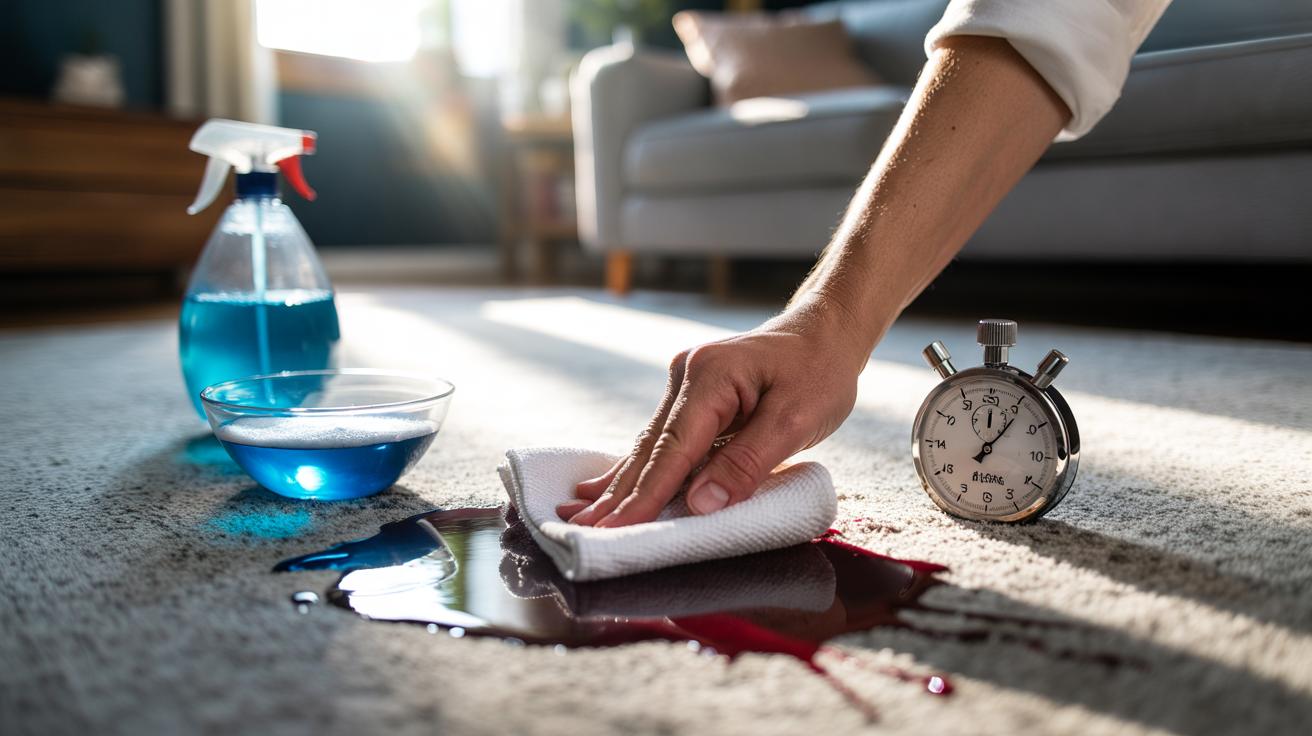
First, act. Scoop solids with a spoon. Blot liquids with a white, lint-free cloth. Never scrub—friction can fuzz the pile and drive pigment deeper. Mix 1 teaspoon (5 ml) of dish soap into 250 ml warm water for synthetics; halve the concentration for wool. Test on an inconspicuous patch for colourfastness. Lightly mist or dab the solution onto the stain—no soaking. Wait 3 minutes, watching for edges darkening (a sign you’ve used too much liquid). Blot firmly from the outside in. Rotate to clean towel sections as they pick up soil. Rinse by misting plain water, then blot again until the towel lifts clean. Finish by grooming fibres with a spoon and ventilate to dry.
| Stain | Dish Soap : Water | Dwell Time | Notes |
|---|---|---|---|
| Grease/Food Oils | 1:50 (5 ml : 250 ml) | 3 minutes | Warm solution helps emulsify; rinse thoroughly to prevent re-soiling. |
| Coffee/Tea | 1:50 | 3–4 minutes | Blot quickly; repeat cycle if tannin shadow remains. |
| Red Wine | 1:40 | 3 minutes | Apply gently; avoid heat until colour is removed. |
| Mud/Soil | 1:60 | 2–3 minutes | Let dry, vacuum, then treat remaining marks with solution. |
| Makeup/Lipstick | 1:40 | 3 minutes | Blot, don’t rub; follow with a plain-water rinse. |
Do not mix dish soap with bleach or ammonia—dangerous gases can form. Keep liquids modest to protect the backing and prevent brown water marks. For large spills, a wet–dry vac speeds extraction. If a halo appears, repeat a lighter application and extend the rinse stage. The goal is clear: lift, remove, and leave minimal residue.
Choosing the Right Soap and Tools
Not all washing-up liquids behave equally on carpet. Pick a formula that’s dye-free, fragrance-lite or fragrance-free, and free from lotions or skin conditioners that can leave residue. Labels listing SLES or LAS plus cocamidopropyl betaine usually deliver balanced cleaning with easy rinsing. Ultra-concentrated products work well but demand a leaner mix; start milder and only step up if the stain persists. Hard water? Use filtered or distilled water for mixing—fewer minerals mean less film and crisper results. Residue is the enemy: anything left behind attracts soil and dulls the patch you’ve just saved.
Tools matter. Keep a fine-mist spray bottle, several white cotton towels, a soft-bristle brush for grooming, and a spoon for lifting. A small wet–dry vacuum is transformational for fast extraction, especially on plush piles. Work under good light to spot remaining tint and repeat only where needed. For wool and natural fibres, dilute further and shorten contact time. If you notice dye transfer to your towel, stop, rinse, and reconsider the chemistry. And always ventilate; faster drying halts wick-back, that pesky ghost ring that reappears hours later.
Three minutes, one cloth, a teaspoon of soap. That’s the compact formula, and when paired with quick blotting and a smart rinse, it rescues carpets from everyday chaos. You’ll save money, avoid harsh chemicals, and keep fibres sprightly. Of course, some stains—set dye, old pet accidents, tar—demand specialist treatments and hot water extraction. When in doubt, stop early, rinse, and call a professional before damage is baked in. What’s the one carpet stain that always tests your patience, and which quick tweak—dilution, dwell, or tool—are you tempted to try next?
Did you like it?4.5/5 (30)