In a nutshell
- 🔑 Understand memory anchoring: pairing a specific cue (gesture, word, scent) with information to enable rapid recall via encoding specificity and state-dependent memory.
- ⏱️ Apply the 5-minute setup: prime state, create a vivid snapshot, bind the cue in short loops, stress-test, and schedule a quick follow-up to reinforce.
- 🧠 Choose smart triggers: use tactile, auditory, visual, or olfactory cues that are distinctive, discreet, and exclusive—one cue, one cluster to prevent interference.
- 🎯 Reinforce quickly: perform brief micro-rehearsals 2–3 times daily and pair with light arousal to stabilise recall under pressure; tweak snapshots if retrieval takes longer than two seconds.
- ⚠️ Know the limits: anchors boost cue-dependent retrieval but can’t replace understanding; avoid stacking topics on one cue and keep usage ethical and personal.
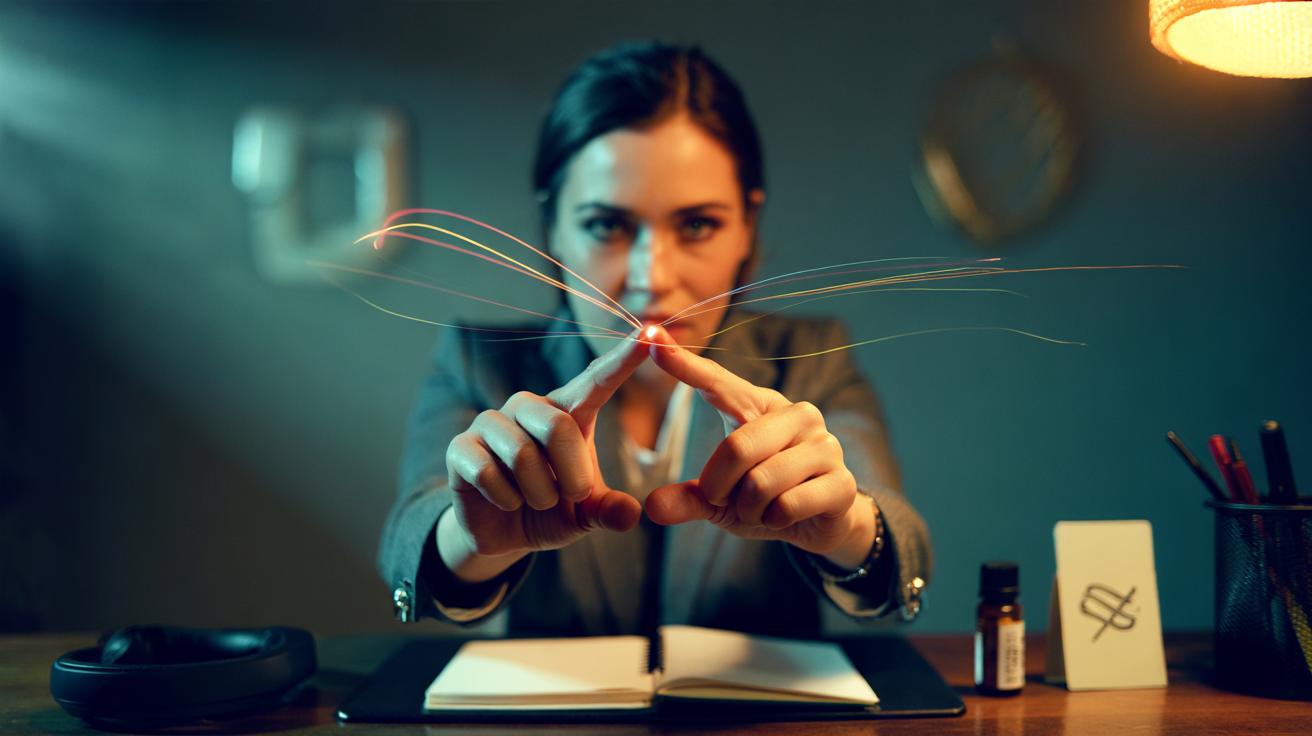
Imagine touching your thumb and forefinger together and instantly recalling a name, a quote, or a formula. That’s the promise of memory anchoring: a rapid method that links a deliberate trigger—a gesture, scent, word, or sound—to a specific memory or idea. It’s quick. It’s practical. It works because your brain adores patterns and reliable cues. In just five focused minutes, you can build a personal “shortcut” to retrieval that slices through distraction. Anchors are not magic; they are engineered cues that make recall easier when it matters. Set one today, test it tomorrow, and watch your confidence rise in meetings, exams, and everyday conversations.
What Is Memory Anchoring and Why It Works
Memory anchoring pairs a chosen cue with the mental content you want to recall. Think of it as deliberate conditioning, backed by principles like encoding specificity and state-dependent memory. When you study with a stable context—breathing rhythm, posture, a tactile gesture—the brain stores the content with those signals. Later, reinstating the cue narrows the search space. This is why a song can return you to a moment. Or a smell pulls back a scene you thought you’d forgotten. Anchors exploit your brain’s natural tendency to bind information to its circumstances, strapping useful prompts to the exact ideas you need under pressure.
| Anchor Type | Trigger Example | Use Case | Time to Set |
|---|---|---|---|
| Tactile | Finger pinch | Exam facts, names | ~5 minutes |
| Auditory | Single word | Pitches, talking points | ~5 minutes |
| Visual | Symbol glance | Diagrams, sequences | ~5 minutes |
| Olfactory | Essential oil | Dense theory, poetry | ~5 minutes |
| Contextual | Posture/breath | Calm under pressure | ~5 minutes |
Under the bonnet, novelty and attention release dopamine and noradrenaline, sharpening the hippocampus’s job of binding cues to content. Small, distinctive signals work best because they reduce interference. An anchor should be specific, repeatable, and used for one domain at a time. When you respect those boundaries, the brain learns the association in a surprisingly short window—and retrieval begins to feel almost automatic.
The 5-Minute Setup: Step-by-Step
Minute 1: Prime your state. Sit upright. Three slow exhales. Choose a single, unique trigger such as a finger tap or a quiet keyword you won’t blurt in public. The trigger must be simple and discreet. Decide on the exact memory target—five bullet points, a quote, a name list, or a formula derivation.
Minute 2: Create a vivid snapshot. Say the content aloud once. Picture where you’ll need it—exam hall, boardroom, café. Add sensory detail: light, sound, even the texture of the desk. Then compress the content into a headline image or short story. Distinctiveness glues it.
Minute 3: Bind the cue. Hold the trigger for five seconds while you replay the content in your mind, then release. Rest ten seconds. Repeat three times: trigger on, recall, release, rest. This is your conditioning loop. Consistency beats intensity here.
Minute 4: Stress-test. Look away. Disrupt with a quick mental task—count back by sevens, hum a bar of music. Now fire the trigger. The target should pop back within two seconds. If it doesn’t, refine the snapshot or make the trigger sharper.
Minute 5: Future-proof. Write where and when you’ll test it next—before a meeting, during a mock question, at the top of a study session. Set one reminder. One anchor per topic prevents cross-talk; create a new cue for a new domain.
Choosing and Strengthening Your Triggers
Select a cue that’s low-noise in daily life but effortless under pressure. Tactile gestures are excellent: a thumb-to-ring-finger touch is distinctive and invisible. An auditory keyword works if whispered privately or repeated silently. Olfactory anchors are powerful yet impractical on the go; use them for heavy study blocks at home. Visual prompts—a tiny symbol in your notebook margin—can double as a retrieval scaffold during review. The key is exclusivity: one cue, one memory cluster.
Reinforcement takes seconds, not hours. After first setup, fire the trigger 2–3 times a day for a week, each time recalling the snapshot for just a breath. That micro-rehearsal stabilises the link. To strengthen under stress, pair the cue with light physiological arousal: a brisk 30-second walk or two fast inhales, slow exhale. Your brain then tags the memory for retrieval in “live fire” conditions, not just at a quiet desk.
Avoid pitfalls. Don’t stack multiple topics on a single gesture. Don’t choose a cue you use socially (finger snap, pen click). And don’t cram; short, frequent binds beat marathon sessions. When the anchor falters, inspect clarity first—often the snapshot is muddy, not the cue.
Science and Limits: What Anchoring Can and Cannot Do
Anchoring borrows from classical conditioning and well-documented retrieval effects: when context echoes the moment of learning, recall gets easier. The mechanism isn’t mystical. It’s about cue-dependent retrieval, attention, and emotional salience. Distinct cues sharpen the signal-to-noise ratio inside memory networks. Pair that with a meaningful snapshot and timing, and you’ve got a reliable shortcut. This is why performers rehearse with the same shoes, or why athletes use pre-shot routines. The cue stabilises state; the state serves the memory.
There are limits. Anchors won’t replace understanding, and they won’t summon facts never encoded in the first place. Interference is real: too many overlapping cues cause collisions. Stress helps only to a point—excess arousal blurs precision. Build anchors on top of solid learning, not instead of it. Then keep them clean: one cue, one cluster, one context. Used well, anchors deliver small, compounding wins that feel like instant recall—but rest on ordinary, testable psychology.
Ethically, keep anchors personal. Avoid manipulating others with covert cues. Your aim is self-regulation, not control. The best sign you’re doing it right? You use the trigger less over time because the knowledge has integrated, yet it’s there the moment stakes rise.
You can set your first anchor today and test it by tomorrow morning’s stand-up or study session. Keep it specific, repeat for seconds not hours, and track results bluntly: did the cue produce the target in two seconds? If not, tweak the snapshot or the trigger. Small changes make anchors snap into place. As your repertoire grows—one for names, one for frameworks, one for quotes—you’ll feel recall become a choice, not a gamble. Which skill, fact set, or moment will you anchor first this week?
Did you like it?4.5/5 (22)